
Fireside Readings: Volume II
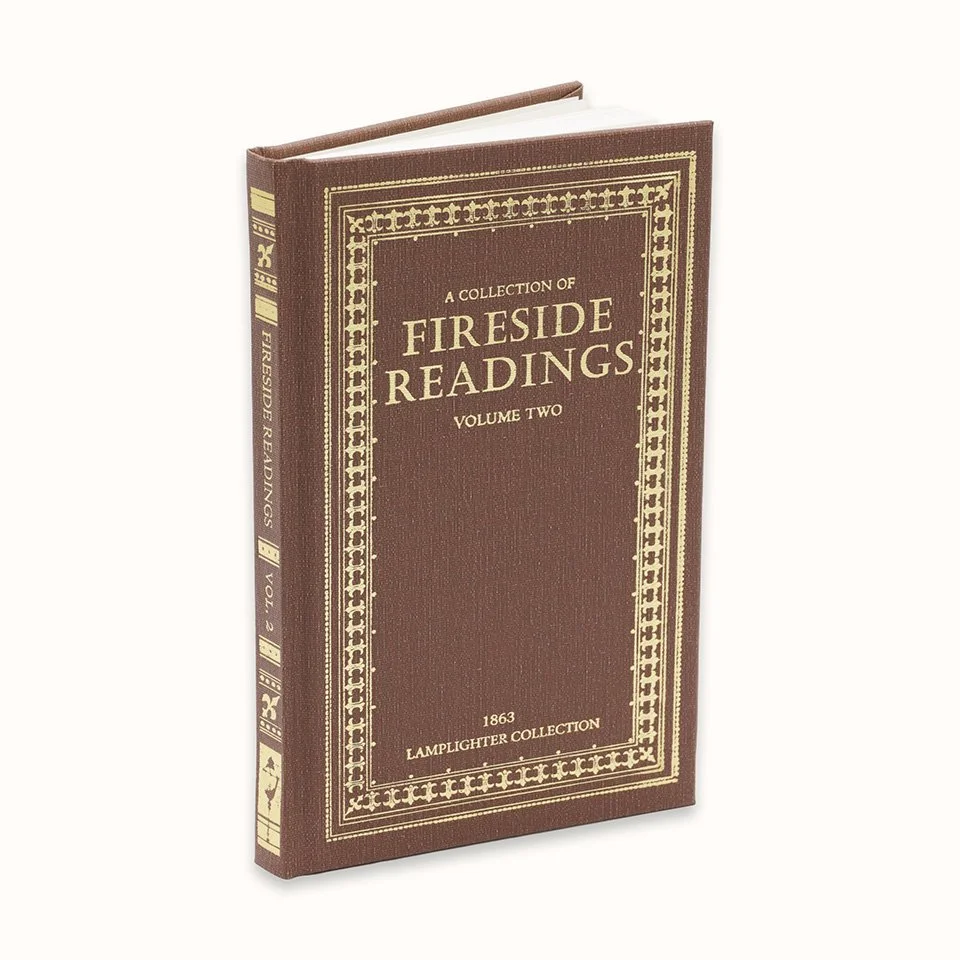
Title and Author: A Collection of Fireside Readings, Volume Two (Featuring "The Bible and the Footstool" and "Annie, the Flower Girl") by Author Unknown / Compiled
Genre Classification: Anthology, Classic Literature
Target Era/Subject: 19th Century Christendom / French & American History
Best Reading Age: Read aloud for ages 7+, Solo reading for ages 10+
Assigned Virtue Tags: faith, fortitude, initiative, hope, responsibility
Living Book Status: Highly Recommended
The Story Overview
In an excerpt found in A Collection of Fireside Readings, Volume Two, a French family has a footstool which they hide from visitors. This footstool is such a treasure for this family and is treated as if it were a precious child. Eventually, the family moves to America so they could have the freedom to read the book that is underneath the footstool. What is it about the Bible that compels families to leave the country they love so much when it forbids them freedom to worship Christ freely? It is because they love something better: the "liberty to read God's word openly and to worship him truly."
It is amazing that in the 21st century, believers under oppressive rule of law are brought to a whisper for their faith, with perhaps only a page of the Bible tucked inside their bosom. What hope have they that are persecuted for the cause of Christ? Here: "A Psalm of David. The LORD said unto my Lord, Sit thou at my right hand, until I make thine enemies thy footstool." (Psalm 110:1)
In another story called Annie, the Flower Girl, a little girl is handed over to an old widow by her father and grows into her formative years with an entrepreneurial spirit and a loving heart for righteousness. It would seem like a heart-wrenching circumstance to grow up without your parents, but not so for Annie. She is compelled to assist her surrogate grandmother during her bout with illness and learns to sell flowers at the marketplace, an endeavor she takes very seriously and with the greatest care. Her grandmother, the care-giver and teacher that she is to Annie, used to say that, "God placed man in a garden when he was happy and holy; and when he was sorrowful, it was in a garden that the blessed Saviour wept and prayed for the sin of the world; and when his death had made atonement for that sin, it was in a garden his blessed body was laid." Isn't it wonderful to know that the Saviour welcomes orphans forsaken by their parents and is willing to adopt them into His family? We know Christ speaks in a very simple manner to us and has "instructed his disciples from vines and lilies, corn and fruit, and birds and all natural things around them."
Why It is a Living Book
This anthology shines as a living book due to its evocative, emotionally resonant prose. Rather than merely telling children to value scripture or work hard, the narrative shows characters dynamically living out these truths under duress. The prose connects the natural world to spiritual realities, beautifully illustrated by the grandmother's discourse on how God uniquely uses gardens throughout redemptive history. The text handles the heavy realities of orphans and religious persecution with a comforting, age-appropriate gravity that elevates the child's mind.
Parent Guide
While thoroughly inspiring, parents should note that "The Bible and the Footstool" touches upon the sobering reality of religious persecution and the fear of living under oppressive rule. "Annie, the Flower Girl" begins with a child being left by her father, which could prompt questions from sensitive children regarding abandonment. However, these elements are treated with immense delicacy and serve as excellent fireside conversation starters about the historical blessing of religious liberty, the dignity of honest labor, and how Christ acts as a defender and adopter of the fatherless.